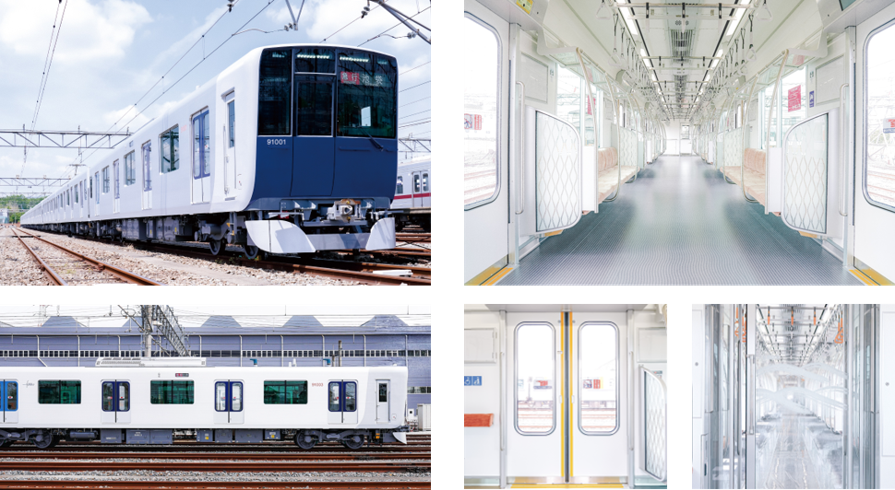
Tobu Railway and Hitachi, which was responsible for the body design, exterior styling development and manufacturing of the Tobu Tojo Line’s new 90000 Series commuter train, have announced that the 90000 Series has jointly received the Good Design Best 100 Award 2026, organised by the Japan Institute of Design Promotion (JDP).
The train has also been selected for the ‘My Favourite Design 2026: Good Design Award Judge’s Selection’, a special recognition chosen by Good Design Award judges.
Tobu Railway began commercial operation of the 90000 Series on the Tobu Tojo Line on 26 September 2026. As of October 2026, the fleet stands at three trainsets (30 cars).
Designed under the concept of ‘A ferryboat that connects the region, people and the future: Watashi-bune’, the 90000 Series draws inspiration from the historical river transport culture that once supported the movement of people and goods along the Arakawa and Shingashi Rivers in the Tobu Tojo Line area. The concept reflects the Tobu Group’s vision of creating “a people-friendly society where communities and individuals continue to thrive together.”
For the exterior, the train adopts a bold and memorable front-end design featuring a reverse-slant profile with a curved lower section inspired by the hull of a traditional Takase-bune riverboat. The interior was also designed around the theme of river transport. Traditional Japanese motifs, including Tatewaku (traditional rising-wave) patterns on partition panels and flooring designs inspired by Karesansui dry landscape gardens, have been incorporated throughout the train. Glass side partitions and enlarged side-door windows that extend closer to the floor enhance openness and visibility, making the interior feel more spacious.
The 90000 Series incorporates the latest energy-efficient technologies, including full-SiC VVVF traction control systems, high-efficiency induction motors and LED lighting. These technologies reduce power consumption by more than 40 per cent compared with the existing 9000 Series trains.
The judges said: “Before railways became the dominant mode of transportation, river transport played a central role in regional mobility. Incorporating that story into the design of a commuter train is both unexpected and compelling. The reverse-slant front end inspired by the traditional Takase-bune riverboat creates a highly distinctive identity.”
They added: “Thoughtful details, such as tall door windows that allow children to enjoy the view outside, reflect a strong focus on passenger comfort and experience. We particularly commend the way it opens new opportunities for commuter train design.”
Judge member Jian Zhang said: “I was struck by the distinctly Japanese attention to detail, the beauty rooted in everyday local life and the warm regard for people and place.”